Diocese of Ootacamund
DIOCESE OF OOTACAMUND · 1776–2026
250 Years of Missions Étrangères de Paris (MEP) Presence in India
A LETTER TO THE DIOCESE
This year, as we gather for our Clergy Retreat from 27 September to 2 October 2026, we will have the privilege, on 1st October, of honouring the great missionaries of the Missions Étrangères de Paris (MEP) who are resting in the cemetery at Sanatorium, Wellington. It is a fitting occasion for us, as the Diocese of Ootacamund, to remember with gratitude and reverence those missionary priests who dedicated their lives for the proclamation of the Gospel and for the growth of the Church in our region.
The MEP Fathers have contributed immensely to the foundation and development of our Diocese. Their missionary zeal, pastoral dedication and selfless service have left an indelible mark on the Church in South India. The Sanatorium became a place of rest for many of these missionaries who spent their lives in the service of God's people. By honouring them, we acknowledge the precious faith heritage that we have received from them and renew our commitment to continue their missionary spirit.
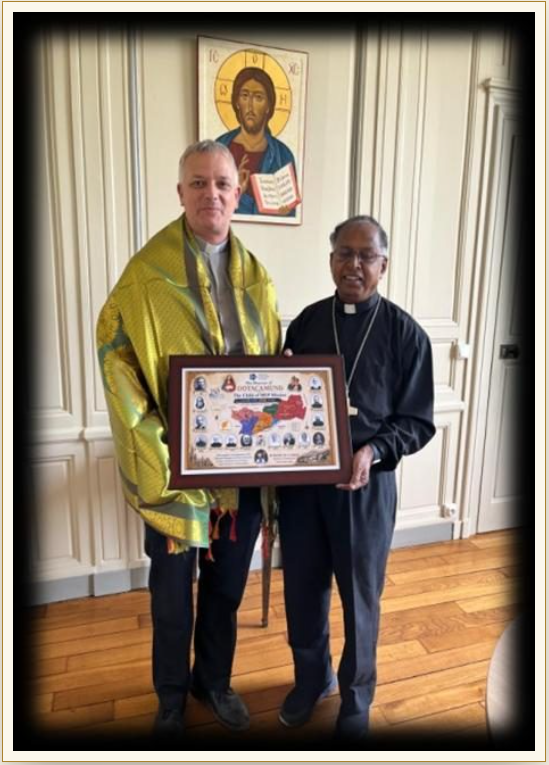
Personally, I had the opportunity to visit the MEP Mother House and convey our greetings and gratitude to the Superior General. The 250th Jubilee celebration of the MEP presence in India, held at the Archdiocese of Pondicherry-Cuddalore, was attended by Msgr. V. Christopher Lawrence, who represented our Diocese and conveyed our greetings and prayers on that memorable occasion. At this significant moment, I also proudly remember the contribution of our own diocesan priests who serve as MEP missionaries: Rev. Fr. G.M. Maria Paschal Sundaram MEP and Rev. Fr. Thomas MEP. Their dedication is a beautiful expression of the missionary zeal that continues to live in our Diocese.
As we honour these great missionaries, may we renew our own commitment to the mission entrusted to us. May the example of the MEP Fathers inspire us to become faithful witnesses of the Gospel and dedicated servants of God's people.
A MISSIONARY LEGACY
The Missions Étrangères de Paris (MEP) was founded with a special mission to serve the Church in Asia. Responding to the call of evangelisation, generations of MEP missionaries left their homeland, crossed oceans and came to distant lands with one purpose: to proclaim Christ and serve God's people. They established Christian communities, promoted education, formed local clergy and cared especially for the poor and those living in remote areas, laying strong foundations for the growth of local Churches across Asia, including India.
The history of our Diocese is deeply connected with this missionary legacy. The MEP Fathers worked in difficult circumstances, often with limited resources, but with great faith and dedication. Many of them spent the best years of their priestly lives among our people. Their resting place at Sanatorium cemetery continues to remind us of their generosity, sacrifice and love for Christ and His Church.
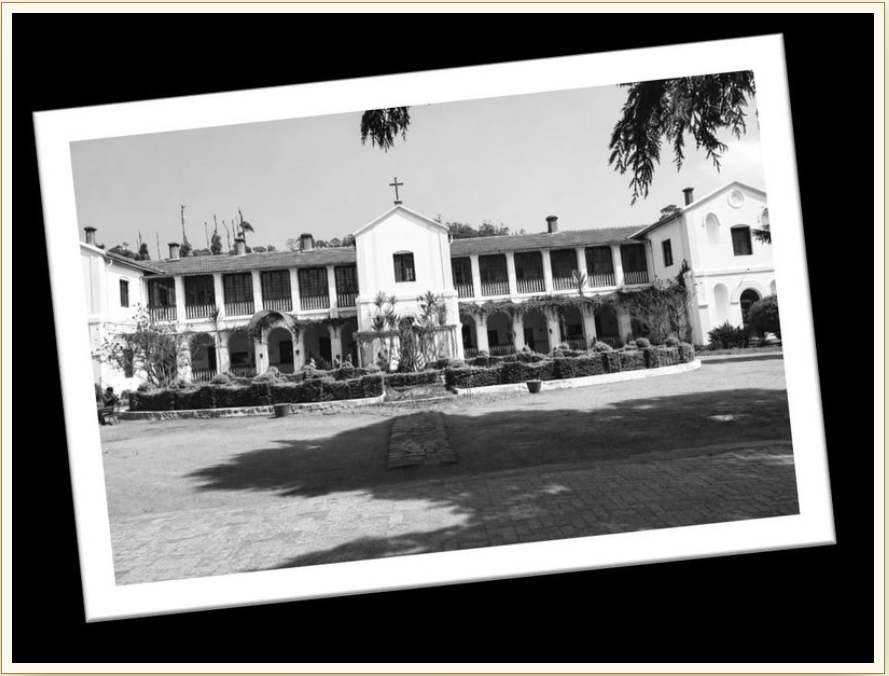
IN MEMORIAM
| Name | Birth | Death |
|---|---|---|
| Rev. Fr. G. Daugaron | 17.05.1836 | 05.06.1902 |
| Rev. Fr. J.M. Pottier | 30.04.1822 | 15.06.1902 |
| Rev. Fr. P.M. Renevier | 05.04.1835 | 29.04.1904 |
| Rev. Fr. Felix Dupas | 29.04.1843 | 13.06.1907 |
| Rev. Fr. Jumentier | 01.10.1874 | 06.04.1909 |
| Rev. Fr. P.P. Rodhan | 12.08.1868 | 06.06.1914 |
| Rev. Fr. Pierre Teyssedre | 21.11.1844 | 02.11.1915 |
| Rev. Fr. J.Tn. Gudin | 06.08.1850 | 09.04.1916 |
| Rev. Fr. S. Pageault | 06.05.1833 | 04.04.1916 |
| Rev. Fr. J.L. Mette | 15.09.1854 | 30.05.1917 |
| Rev. Fr. J.M. Jegorel | 19.01.1848 | 02.05.1918 |
| Rev. Fr. Clement Pouzol | 09.11.1843 | 04.09.1919 |
| Rev. Fr. A. Lanoe | 19.02.1892 | 07.05.1920 |
| Rev. Fr. J.M. Carraze | 12.02.1845 | 06.04.1923 |
| Rev. Fr. Joannes Maria Bertho | 24.12.1845 | 14.07.1931 |
| Rev. Fr. H.A. Barey | 05.06.1850 | 03.10.1934 |
| Rev. Fr. Camille Petite | 08.12.1857 | 28.03.1945 |
| Rev. Fr. Antoine Boissiere | 18.05.1834 | 01.06.1952 |
| Rev. Fr. Leon Bechu | 11.02.1880 | 03.02.1966 |
| Rev. Fr. Raoul Collart | 06.09.1887 | 22.12.1970 |
| Name | Birth | Death |
|---|---|---|
| Rev. Fr. Dalquié, Pierre-Jean | 14.01.1841 | 10.03.1877 |
| Rev. Fr. Béroulle, Henri-Frédéric-Louis | 28.11.1847 | 12.04.1892 |
| Rev. Fr. Lemarchand, Aimé-Julien-François | 13.09.1830 | 20.03.1901 |
| Rev. Fr. C. Valentin Morin | 06.01.1871 | 22.04.1945 |
Let us remember them with gratitude and offer our prayers for their eternal reward.
14 LIVES OF SERVICE
Their lives and missionary contributions remain an important part of our diocesan history. May knowing their stories help us appreciate the rich missionary heritage entrusted to us. Tap a name to read the full biography.
Born on 17 January 1879 in Saint-Étienne-des-Champs, in the Diocese of Clermont-Ferrand, France, Louis Perrière entered the Seminary of the Paris Foreign Missions Society (MEP) on 4 October 1901. He was ordained a priest on 24 September 1904 and left for the Mission of Coimbatore on 9 November of the same year. After studying English and Tamil, he served briefly as vicar at Kodiveri before being appointed director of St. Michael's Orphanage in Coimbatore in 1906, and later served at Kolappalur and briefly as vicar at St. Mary's Church, Ootacamund, though poor health at the high altitude forced his return to Coimbatore.
From 1912 he devoted himself mainly to educational work, directing St. Michael's Orphanage and, from 1915, the Industrial School. In 1919 he was appointed superior of the Minor Seminary of Coimbatore, a post he held for many years, during which the number of seminarians grew from about fifteen to around thirty-three. He built a large refectory with a dormitory above it, and was remembered for his paternal care, disciplined formation, spiritual guidance, Latin teaching and firm corrections.
In 1940, declining health took him to St. Theodore's Sanatorium in Wellington, where he cared for fellow missionaries. When the Nilgiris became part of the newly reconstituted Diocese of Mysore, he went there in 1942 to found its Minor Seminary, later serving as chaplain of St. Martha's Hospital, Bangalore, and again as superior of the Mysore Minor Seminary until 1951.
In 1952 he joined St. Peter's Major Seminary, Bangalore, as a Latin professor and spiritual director. When the Diocese of Ootacamund was created in 1955, his heart condition prevented him from living at the high altitude he had long wished to return to, and he remained in Bangalore, taking charge of the major seminary's administration from 1958 to 1960 while its superior was in France.
He retired to St. Martha's Hospital in 1960, continuing to pray the breviary and celebrate Mass almost to the end. Father Perrière died peacefully on 26 June 1963 and was buried in the Sacred Heart Parish Cemetery, Bangalore, in the presence of the Archbishop of Bangalore and the Bishops of Mysore and Ootacamund. He is remembered as deeply paternal, generous and completely surrendered to God's will through his long years of missionary service.
Laid to rest: Sacred Heart Parish Cemetery, Bangalore
 Léon Auguste Louis Jean-Marie Béchu, MEP
1880–1966
Vicar General of Coimbatore; 21 years chaplain at St. Joseph's College, Coonoor
Born on 11 February 1880 in Saint-Pierre-des-Landes, Diocese of Laval, France, Léon Béchu joined the MEP in 1900, was ordained a priest on 26 June 1904, and arrived in India in September 1904 to serve the Diocese of Coimbatore. After learning English and Tamil, he began his ministry in the Nilgiris as assistant priest in Coonoor, later directing St. Michael's Boarding School, Coimbatore, and caring for hundreds of scattered Christians in Dharapuram.
In 1912 he became Parish Priest of Coonoor, expanding St. Antony's Church and School, founding a youth association and starting a Tamil publication. During the plague epidemic of 1918 he courageously served his people and survived the illness himself. In 1919, Bishop Roy appointed him Vicar General of the Diocese of Coimbatore, a role in which he promoted education, established the Good Shepherd Primary School and opened the Nazareth Home, working for the growth of local clergy — in 1929 the first Indian priest was appointed parish priest of Coimbatore Cathedral.
He later served again as Parish Priest of Ooty and Coonoor, was appointed Vicar Capitular of Coimbatore in 1938, and became Administrator of the Nilgiri territory as it was reorganised into the Diocese of Mysore. For 21 years he served as chaplain at St. Joseph's College, Coonoor.
In 1964 he retired to St. Theodore Sanatorium, Wellington, where he died peacefully on 3 February 1966 after 62 years of missionary service. A contemporary testified: “Finding faults in Father Béchu is easy, but doing better than he did is not easy.”
Laid to rest: St. Theodore Sanatorium, Wellington
 Paul Pierre Crayssac, MEP
1884–1967
Builder of the Kandal Cross devotion in Ooty
Born on 31 August 1884 in Brasc, Diocese of Rodez, France, Paul Crayssac joined the MEP in 1905, was ordained on 26 September 1909, and arrived in India on 1 December 1909 for the Coimbatore Mission. He began his ministry in Wellington, Kodiveri and Coimbatore, and in 1913 was appointed Parish Priest of St. Mary's Church, Ootacamund, where he spent many years. His ministry was interrupted by the First World War, in which he served as a stretcher-bearer and was seriously wounded at Verdun, losing a leg — yet he returned to India with renewed missionary zeal.
In Ooty he baptised thousands of adults and strengthened Christian communities, especially in the Finger Post area, and established St. Theresa's Church. In 1933, while developing a new cemetery at Kandal, he erected a large cross on a rock and later added the Stations of the Cross, making Kandal a renowned place of pilgrimage that deeply rooted devotion to the Passion of Christ in the Nilgiris.
As the Nilgiris became part of the Diocese of Mysore in 1941, Bishop René Feuga appointed him Vicar General; after the Diocese of Ootacamund was established in 1955, Bishop Anthony Padiyara again named him Vicar General and Director of the Minor Seminary.
He retired to St. Martha's Hospital, Bangalore, in 1963, and died peacefully on 24 June 1967 after nearly 58 years of missionary service, remembered above all for the Kandal Cross — a lasting symbol of faith in Ootacamund.
Laid to rest: Priests' cemetery, Sacred Heart Church, Bangalore
 Raoul Marie Collart, MEP
1887–1970
Long-serving professor and Rector, St. Joseph's College, Bangalore
Born on 6 September 1887 in Reims, France, Raoul Collart entered the MEP seminary in 1904, was ordained on 2 March 1912, and arrived in India on 17 April 1912 for the Diocese of Mysore. He was appointed to St. Joseph's College, Bangalore, serving as professor from 1912 to 1931 and Rector from 1931 to 1937, contributing greatly to the institution's academic and spiritual development.
He later served briefly at Champion Reef before joining the faculty of St. Peter's Major Seminary, Bangalore, continuing priestly formation until 1941. From 1942 to 1958 he served as chaplain to the Sisters of St. Joseph of Tarbes and their school in Coonoor, dedicating himself to the spiritual formation of young girls and promoting Eucharistic devotion and Marian activities.
With the establishment of the Diocese of Ootacamund in 1955, he joined its missionary team under Bishop Antony Padiyara. He retired to St. Theodore's Sanatorium, Wellington, in 1959, and in 1962 celebrated his golden jubilee of priesthood surrounded by former students. Father Collart died on 22 December 1970 and was buried at the Sanatorium, remembered as a gifted educator and compassionate spiritual guide.
Laid to rest: Cemetery of St. Theodore's Sanatorium, Wellington
 Alphonse Nauroy, MEP
1889–1966
17 years as chaplain at Nazareth Convent, Ootacamund
Born on 17 February 1889 in Ancy-sur-Moselle, Diocese of Metz, France, Alphonse Nauroy joined the MEP in 1908, was ordained on 26 September 1912, and arrived in India on 21 December 1912 for the Diocese of Mysore. After studying Tamil and Kannada, he began ministry at St. Mary's Parish, Bangalore, and later as Parish Priest of Chikmagalur among Christians scattered across coffee plantations. During the First World War, because of his German origin, he faced difficulties with the British authorities and was temporarily sent to French territory in Pondicherry.
Returning to British India, he served the poor and marginalised in Tirthahalli and Mattigiri, and from 1926 to 1931 as Parish Priest of Mercara in Coorg. From 1948 he became closely connected with the Nilgiris, appointed in 1949 as chaplain of the Franciscan Missionaries of Mary at Nazareth Convent, Ootacamund, where he served faithfully for 17 years, dedicated to the spiritual formation of the sisters, students and young people, and known as a compassionate confessor sought out by priests and religious for his simplicity and wisdom.
Though he suffered from cancer, Father Nauroy continued his ministry with great faith and serenity, dying peacefully on 22 May 1966 in Bangalore at the age of 77, after more than 53 years of missionary service. He is remembered as a humble missionary who spent his life quietly accompanying people and strengthening the Church.
Laid to rest: Sacred Heart Cemetery, Bangalore
 Edmond Jean Louis Périé, MEP
1890–1960
Parish priest among the Badaga people of Ketti
Born on 25 December 1890 at Sainte-Croix (Aveyron), France, Edmond Périé joined the MEP in 1921, was ordained on 29 June 1922, and was sent to the Diocese of Coimbatore on 28 April 1924. He served as chaplain to religious sisters in Ooty, as professor at the Major Seminary of Pondicherry, as Parish Priest of Ketti among the Badaga people (1930–1934), Director of the Industrial School and Orphanage in Ooty from 1934, Head of the districts of Gudalur and Kotagiri, Parish Priest of St. Theresa's Church, Ooty, and later Superior of the St. Theodore Sanatorium (1955/56–1959).
In Ketti he worked among the Badaga community, established schools and built a church in 1933. In Gudalur, amid the difficult conditions of plantations and scattered settlements, he built a chapel at Singara Power Station in 1939. Known for his simplicity, humility and deep spirituality, he was loved by priests, religious and faithful alike, always placing the needs of others before his own.
He retired to the Sisters' Hospital in Ooty and died peacefully on 20 January 1960 at the age of 70, after 36 years of missionary service. At the request of the Badaga Christians he was buried at Ketti. Bishop Saverimuthu of Coimbatore, in his funeral tribute, described him as “a good priest, a zealous missionary and a man of God.”
Laid to rest: Ketti, at the request of the Badaga Christians
 Guillaume Bassaisteguy, MEP
1899–1961
Superior of St. Peter's Seminary, Bangalore; renowned for sacred music
Born on 7 March 1899 in Ahaxe-Alciette-Bascassan, Diocese of Bayonne, France, into a farming family, Guillaume Bassaisteguy joined the MEP in 1917, was ordained on 19 December 1925, and was sent to the Diocese of Coimbatore on 6 April 1926. After formation as assistant in Kodiveri, he dedicated most of his priestly ministry to forming seminarians, teaching Moral Theology and Liturgy at the Major Seminary of Pondicherry and later St. Peter's Seminary, Bangalore.
For more than twenty-five years he played a significant role in priestly formation, becoming Superior of St. Peter's Seminary in 1950. Gifted in music and liturgy, he developed a renowned seminary choir and promoted Gregorian chant throughout South India.
In 1960, declining health led him to resign as Superior and return to pastoral ministry in the Diocese of Ootacamund, where Bishop Padiyara appointed him Parish Priest of St. Mary's Church, Ooty, and Vicar General of the Diocese. After only a short period of service, he died suddenly of a heart attack on 6 August 1961, the Feast of the Transfiguration. He rests in the cemetery of St. Mary's Church, Ooty, remembered as a lover of the Eucharist and liturgy and a gifted formator of priests.
Laid to rest: Cemetery of St. Mary's Church, Ooty
 Janvier Dezest, MEP
1901–1967
Superior of St. Theodore Sanatorium, caring for fellow MEP missionaries
Born on 9 January 1901 in Saint-Martin-de-Seignanx, France, Janvier Dezest, inspired from his youth by missionary writings, joined the MEP in 1927, was ordained on 29 June 1929, and was sent to the Coimbatore Mission. He began ministry in the Nilgiris, learning English and Tamil at St. Mary's Church, Ootacamund, and later became Parish Priest of Gudalur, caring for Tamil and Malayalee Christians on coffee and tea plantations, and then of Sacred Heart Church, Ooty, dedicating himself to the poor and working communities.
He served in numerous missions — Kodiveri, Mercara in Coorg, Sacred Heart Ooty, Nagalur, Lovedale and Wellington — and at St. Theresa's Parish, Ooty, expanded the primary school for the poor. After the Diocese of Ootacamund was established in 1955, he continued his ministry there and later served as Superior of St. Theodore Sanatorium, Wellington, caring for fellow MEP missionaries with great hospitality.
Known for his joyful personality, discipline and compassionate heart, he eventually returned to France, serving as chaplain at the Carmelite monastery of Muret, where he died on 7 January 1967 after nearly 38 years in missionary service.
Laid to rest: Died in France, chaplain of the Carmelite monastery of Muret
 François-Xavier Legrand, MEP
1907–1976
Scholar, organist and teacher of theology at Ketti and Nazareth
Born on 3 December 1907 in Boulogne-sur-Mer, France, François-Xavier Legrand joined the MEP seminary at Bièvres in 1926 and was ordained a priest on 2 July 1933, despite a natural shyness that made public preaching a lasting difficulty. Gifted in music and languages, he had served as an organist at Bièvres and Paris, performing works by Bach and Mendelssohn.
Assigned to the Coimbatore Mission, he arrived in India in October 1933, quickly acquiring English, Tamil and later Kannada. In 1936 he trained under Father Crayssac at St. Mary's Parish, Ooty, though the altitude aggravated his rheumatism. As parish priest of Tirupur (1936–1938) he became actively involved in the pastoral care of people from socially oppressed communities, recording 385 adult baptisms among the Koravers alongside conversions among the Harijans, coinciding with Gandhi's campaign against untouchability. He was then transferred to Coonoor, a parish of some 7,000 Catholics scattered over 50 kilometres.
Following the 1940 reorganisation into the Diocese of Mysore, Bishop René Feuga called him to serve as chaplain of the Good Shepherd Convent, then in Chikmagalur and Magghe, before he returned to the Nilgiris for various pastoral positions from 1943 to 1958, including Sacred Heart Church, Ootacamund (1951–1956) and Lovedale (1956–1957).
His declining health led to his appointment as chaplain of the Franciscan Missionaries of Mary novitiate at Ketti Valley, where his intellectual gifts flourished: he prepared theological, liturgical and biblical courses for sisters and novices, and studied Carnatic music, adapting elements of the South Indian classical tradition for liturgical texts and psalms. Later he served as chaplain at Finger Post and at Nazareth Convent, Ootacamund.
On 3 January 1976, while still serving at Nazareth, he became suddenly ill and died unexpectedly at the age of 68. His funeral was celebrated at St. Mary's Church, Ootacamund, and he was buried in its parish cemetery alongside his missionary confreres.
Laid to rest: St. Mary's Parish Cemetery, Ooty
 Guillaume Raynaud de Prigny, MEP
1908–1974
Parish priest across a succession of Nilgiris mission centres
Born on 13 December 1908 in Urt, Pyrénées-Atlantiques, France, Guillaume Raynaud de Prigny was ordained a priest for the Diocese of Bayonne on 17 July 1932. In 1936 he was admitted to the MEP, and on 14 September 1937 left France for the Coimbatore Mission.
After studying English and Tamil, he served as vicar in Coonoor, Coimbatore and Gudalur, and in 1939 was appointed to the parish of Valparai. He went on to serve as parish priest in a succession of mission centres — Mettur-Chinnappallam, Sagari, Matahalli, Selassi, Pandalur and Naduvattam in the Nilgiris — spending many years working among the people of these mission territories.
After his long missionary service in India, he returned to France and later served in Guadeloupe, where he was incardinated in 1962. In 1967 he returned to the Diocese of Bayonne and went to Central Africa as a Fidei Donum priest, continuing his missionary vocation. In his later years he retired to his native Urt, where he died peacefully on 2 November 1974 at the age of 65.
Laid to rest: Urt, France
 Marcel Fayolle, MEP
1913–1983
Zealous pastor with a deep devotion to Our Lady
Born on 11 February 1913 in Dunières, France, Marcel Fayolle was ordained a priest on 29 June 1937 and, after two years teaching at the minor seminary of La Chartreuse, joined the MEP in 1941. He arrived in India on 24 May 1946 for the Mission of Mysore, learning English and Tamil and serving in Kodivieri, Michaelpalayam, Nagalur and Kotagiri, where in 1953 he was appointed parish priest, distinguished by his zeal and deep devotion to Our Lady.
With the erection of the Diocese of Ootacamund in 1955, he served successively at Sathyamangalam, Ithalar, Kundah and Lovedale, undertaking construction and renovation work including an orphanage at Sathyamangalam, and ministering to Badaga workers of the Emerald dam projects at Ithalar. From 1964 at Lovedale he worked closely with Lawrence School and developed the parish school for Tamil children; from 1968 he spent eleven years at Selas, caring for Catholics scattered among tea plantations with the help of catechists and the Sisters of St. Joseph of Cluny, establishing the parish of Kolacombai and a chapel at the remote Nonsuch plantation.
He returned to Lovedale in 1981, but was soon diagnosed with liver cancer, and died peacefully and courageously on 24 September 1983 in Bangalore, at the age of 70. His funeral at St. Mary's Church, Ootacamund, was concelebrated by about 60 priests with the Bishop; he is remembered for his kindness, good humour and deep pastoral concern for the poor.
Laid to rest: St. Mary's Parish Cemetery, Ooty
 Jean Laborde, MEP
1920–1998
Fifteen years at Ketti; builder of houses for the poor
Born on 13 March 1920 in Oraas, Béarn, France, Jean Laborde joined the MEP in 1946 and was ordained a priest on 19 December 1949, leaving for the Mission of Mysore on 3 March 1951. After studying local languages in Mysore and Lovedale, he was appointed parish priest of Ketti in 1953, serving there for fifteen years and becoming particularly known for his social concern for the poor, especially through the construction of houses for needy families.
From 1968 to 1974 he served as parish priest of Kalhatti, and was subsequently appointed Superior of St. Theodore Sanatorium in Wellington, serving from 1977 to 1994. When the sanatorium was transferred to the Diocese of Ootacamund in 1994, he was entrusted with the pastoral care of the Christian community at Indunagar.
Until the end of his life he continued his dedicated social ministry among the poor and needy, dying in Coonoor on 12 March 1998, one day before his 78th birthday. He is remembered especially for his long pastoral service in Ketti and Kalhatti and his practical efforts to provide homes and assistance to poor families in the Nilgiris.
Laid to rest: Died in Coonoor
 Jean Nouet, MEP
1922–2008
Twenty-six years at Budapadi: wells, schools and a hospital for the poor
Born on 7 February 1922 at Le Pallet, Diocese of Nantes, France, to a farming family, Jean Nouet developed a strong missionary vocation during his seminary years and joined the MEP seminary in Paris in February 1944. Ordained a priest on 21 December 1946, he was assigned to the Diocese of Mysore, arriving in India on 6 May 1947, and after studying Kannada was appointed director of the St. Philomena Orphanage in Mysore.
In January 1950 he was appointed parish priest of the remote, forest-surrounded Doddagajanur near the Tamil Nadu border, continuing missionary work begun by the Franciscans among hundreds of catechumens. He later served at Peria Kodiveri, regularly travelling into the mountains to visit the impoverished Urali tribal communities and building them a primary school; at Pandalur among Malayalam-speaking Christians; and at Sholurmattam, where he built a stone church.
In 1971 he volunteered for Gundri, a remote mountain mission among the Urali people, where he lived in extremely simple conditions, arranged for the Franciscan Missionary Sisters of Mary to operate a clinic, built a five-classroom school, and established a free boarding school for about 50 Urali children. In 1976 he built 15 small houses for poor families.
Health problems — chronic bronchitis aggravated by humidity — took him to Masinagudi in 1979 and finally to the drier plains of Budapadi in 1982, where he remained until his death in 2008, the principal field of his missionary work. There he secured a reliable water supply by locating a well at 40 metres depth, popularly regarded as a blessing of St. Ignatius, and made education and the relief of poverty central to his mission: vocational training, a mechanics section for apprentices, sewing training for young women, scholarships, classrooms, water facilities, housing and medical care. After years of legal effort, the High Court ordered the government in 1991 to recognise and fund the school he had built, which continued to grow with buses bringing children from surrounding areas. He also helped develop a clinic that grew into a hospital serving the poorest of the region, staffed in time by the Assisi Sisters, specialists in the treatment of leprosy.
Despite numerous serious health problems over the decades — the removal of a kidney, chronic bronchitis, digestive and hormonal difficulties, a fractured hip and heart problems — his missionary commitment never wavered; he resigned as parish priest in 2002 at the age of 80 but continued to support the school he had built. In December 2006 he celebrated his 60th anniversary of priesthood and 25th year at Budapadi. Fr. Jean Nouet died on 15 April 2008 at Budapadi, after more than 60 years of priestly life and 61 years of missionary service in India, and was buried there.
His funeral was an extraordinary public expression of affection: shops closed, funeral hymns were broadcast through loudspeakers, and many of those who mourned him were Hindus who remembered with gratitude the schools, hospital and other services he had built for the whole community. His body was carried in procession to the school and hospital he had founded before the funeral Mass.
Laid to rest: Buried in India, at Budapadi
 Roland Lefèvre, MEP
1929–2017
Nearly 25 years at Kundah; parish priest to the Irula people of Mulli
Born on 6 September 1929 in Oresmaux, France, Roland Lefèvre joined the MEP in 1948, was ordained a priest on 4 July 1954, and was sent to India that October. After studying Tamil and serving for a few years in and around Pondicherry, he arrived in the Diocese of Ootacamund in 1959 and spent the greater part of his missionary life among the people of the Nilgiris.
He served as parish priest of Lovedale, Kundah and Mulli, dedicating nearly 25 years to Kundah — where he built a church, monastery, boarding school and educational institution dedicated to St. Alphonsa — before establishing himself in the remote village of Mulli among the Irula people. His work went far beyond parish ministry: he travelled extensively through the mountains, served tea-estate workers and remote tribal communities, assisted the sick and injured, and helped transport many to hospitals.
Known for his simplicity, humility and tireless concern for the poor, he earned the affection of people of different religions, castes and denominations, and served the Diocese of Ootacamund as Vicar Capitular. From 2004 to 2009 he worked on compiling important writings of the Foreign Missions Society. Declining health took him back to France in 2010, and after a stroke in 2014 he became completely dependent, though he remained conscious of those who visited him. He died peacefully on 28 January 2017 and was buried in the MEP cemetery, remembered for his selfless service among the poor and tribal communities of the Nilgiris.
Laid to rest: MEP cemetery, France
GALLERY

